


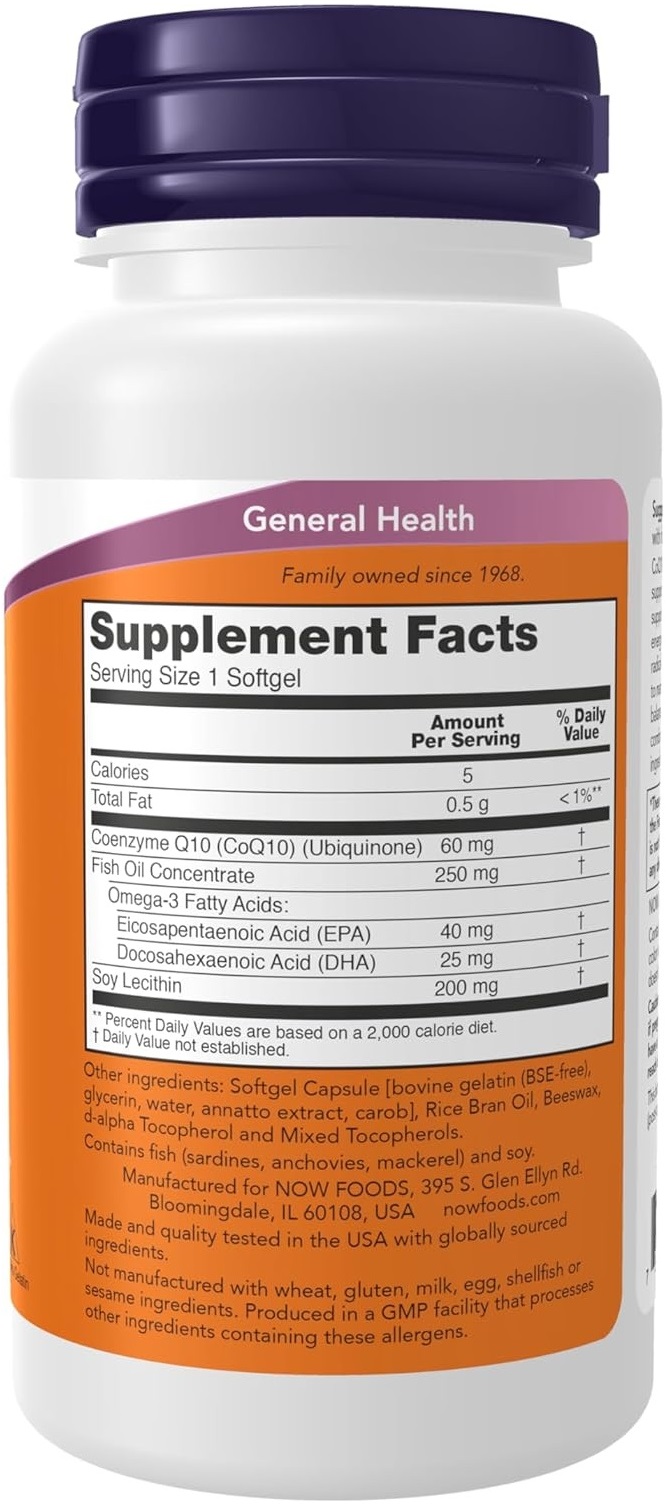


Coenzyme Q10 is a vitamin-like substance found throughout the body, but especially in the heart, liver, kidney, and pancreas. It is eaten in small amounts in meats and seafood. Coenzyme Q10 can also be made in a laboratory.
Fish oil comes from many types of fish. It is rich in two important omega-3 fatty acids called eicosapentaenoic acid (EPA) and docosahexaenoic acid (DHA).
Coenzyme Q10 is most commonly used for conditions that affect the heart such as heart failure and fluid build up in the body (congestive heart failure or CHF), chest pain (angina), and high blood pressure. It is also used for preventing migraine headache, Parkinson disease, and many other conditions.
The benefits of fish oil seem to come from its omega-3 fatty acid content. Fish that are especially rich in these oils include mackerel, herring, tuna, and salmon. The body doesn't produce many of its own omega-3 fatty acids. Omega-3 fatty acids reduce pain and swelling, and also prevent the blood from clotting easily.
Coenzyme Q10 was first identified in 1957. The "Q10" refers to the chemical make-up of the substance.
Fish oil supplements are sometimes used for heart health and mental health. Do not confuse fish oil with EPA, DHA, cod liver oil, flaxseed oil, krill oil, or shark liver oil.
Product Code: rNpcTI3
Product Condition: New
No Reviews Posted Yet - be the first!


